
How long should a break between meetings be?
Published 9 November 2026
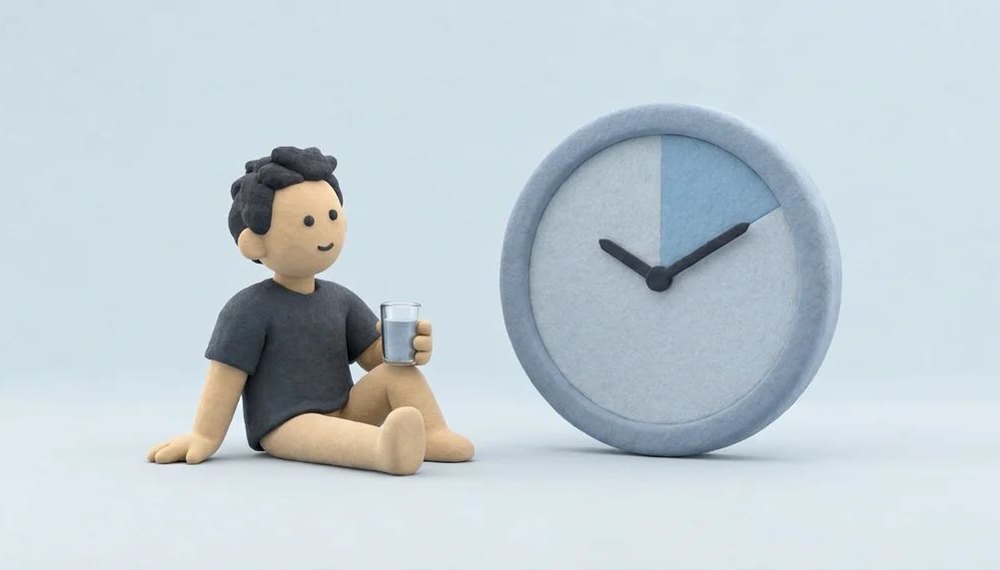
There is no single right length for a break between meetings, but there is a wrong one: zero. This guide covers what 5, 10 and 15 minutes are each good for, what the research says, and how the sum changes on a day spent partly at an office and partly on screen.
The short answer
| Length | Enough for | Suits |
|---|---|---|
| 5 min | Standing up, getting water, opening the next call's link | Short calls that are alike; same team, same subject |
| 10 min | Writing the last meeting's notes, sending the one thing you promised, looking away from the screen | Most people's most days; the sensible default |
| 15 min | Changing subject: from a client to an interview, from a budget to a design review | Meetings very unlike each other, or ones where you do the talking |
The rule: the less two meetings have in common, the longer the break between them. Five minutes is enough between two calls on the same project. Going from a sales call to a job interview, your head has to change rooms too.
What the research says
In 2021 Microsoft's Human Factors Lab ran a small experiment. On one day, participants sat through four half-hour video meetings back to back; on another, the same four meetings with 10-minute breaks between them. Brain activity was measured with EEG. On the back-to-back day, beta wave activity, which is associated with stress, built up from meeting to meeting; on the day with breaks it dropped at each break and did not build up. The moment of switching between meetings was where stress jumped most on the back-to-back day. The details are in Microsoft's write-up.
Two notes. The experiment was small and was a company's own research; read it as a direction, not a precise number. And the breaks really were breaks: participants spent the ten minutes with a meditation app, not with email. Fill the break with preparing for the next meeting and don't expect the same result.
A break or a trip
The numbers above are for two calls on screen. When two meetings are in different places, the time between them is not a break but a trip: it depends on the address, the hour and how you go. Across town at noon can be fifteen minutes and twice that at 9:00. A fixed ten minutes doesn't cover it.
On a mixed day, think of the two apart:
- Going to the meeting at the office: what Google Maps™ gives for that hour, plus 5–10 minutes to park, take the lift and find the door.
- Coming back to a call: the trip home or to your desk, plus at least 10 minutes. Getting out of the car and straight onto camera is not a break.
- Two calls back to back on screen: the 5, 10 or 15 from the table.
Keeping the break
Finding the right length is the easy part. The hard part is keeping it in the calendar. Ten free minutes in your calendar are ten free minutes to anyone else; someone will put "a quick question" there. A break is only protected when it is an event that shows you as busy.
How to do that by hand, and with Google Calendar™'s own settings, is in buffer time between meetings. To have it done for you, DOFOTT does both jobs together: it writes the trip from Google Maps™ before and after meetings at an address, and a 5, 10 or 15 minute break called Brain Sauna around online meetings. When the gap between two calls is shorter than your setting, the break fits the gap; when there's no gap at all, there's no block, so your meetings are never touched.
How long should a break between meetings be?
Ten minutes suits most days. Five is enough between short, similar calls; fifteen when the next meeting is about something quite different or you lead it. Between two meetings in different places, the gap is the trip plus a few minutes.
Are 5-minute breaks between meetings enough?
Between two similar calls, yes: enough to stand up and open the next link. Not enough to write notes or change subject.
Is there research on breaks between meetings?
Microsoft's Human Factors Lab measured brain activity in 2021: stress built up across four back-to-back video meetings and did not when there were 10-minute breaks between them. It was a small study, so read it as a direction.
Google Calendar™ and Google Maps™ are trademarks of Google LLC.